

Where should you install a camera at home?
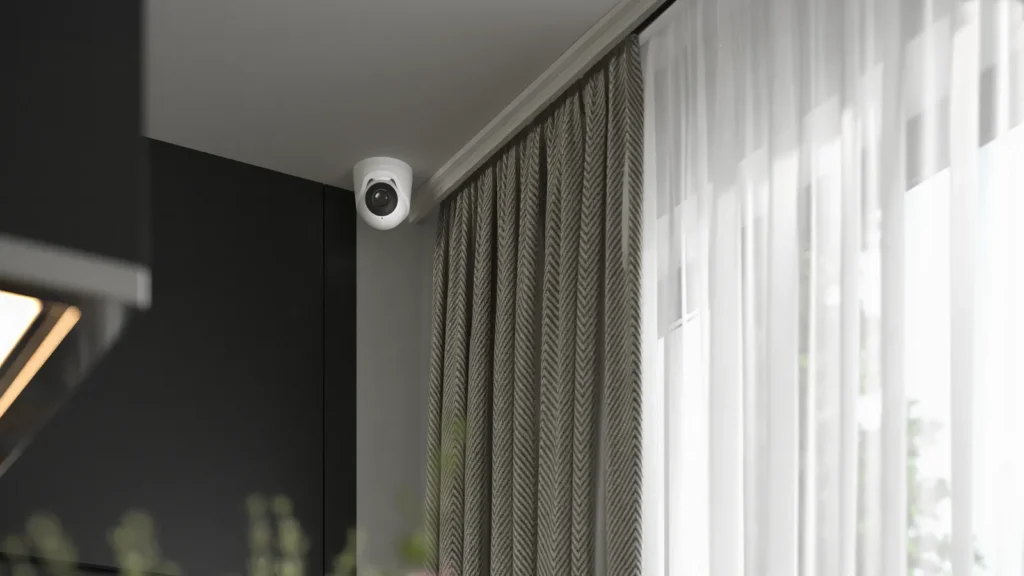
The most common surveillance design mistakes are placing a camera directly above the door (making faces unrecognizable), ignoring the effect of sunlight (causing black silhouettes in recordings), not integrating with advanced detectors (causing false alarms), the wrong height (recording the tops of heads instead of faces), and choosing the wrong lens.
Amateur camera installation brings more frustration than real protection. Years of experience at DEFENCE show that how well it works depends largely on carefully planned device placement within the building’s ecosystem, not just on the resolution of the equipment itself.
In brief
- A camera above the door captures figures from above; DEFENCE installers choose the optimal angle and a safe offset for the viewpoint.
- Sunlight from behind (backlight) creates black silhouettes; we use reliable Ajax camera models with True WDR technology to compensate.
- Integrating cameras with innovative detectors (such as MotionCam photo verification) and Ajax’s built-in AI drastically reduce false alarms.
- A mounting height chosen by our specialists ensures the intruder’s face is fully recognizable and protects the equipment from sabotage.
Where to install cameras at home: installers’ basic rules
As a team of certified engineers, we design systems to fully cover every access point: by the entrance doors, large patio glazing, and key ground-floor hallways. At DEFENCE, we strictly avoid mounting a camera directly above the door frame; we offset the device and aim it at the optimal angle.
The key zones are the so-called forced paths an intruder has to take. Professional surveillance reliably captures the face of someone trying to force the lock. That means a precisely measured camera angle and equipment chosen for the lighting at that spot determine the evidential value of the entire recording.
Mounting a camera right above the door: why is it a mistake?
A camera hung centrally above the threshold mostly records hats and distorted figures. That angle drastically lowers the chances of the police identifying the intruder after a successful break-in.
Placing devices asymmetrically (for example, outdoor cameras such as Ajax BulletCam or dome cameras such as DomeCam Mini) on the right side walls makes it possible to capture the intruder’s full profile. In addition, the advanced AI analytics built into professional Ajax equipment accurately distinguish people, pets, and vehicles, ignoring a cat running past.
How sunlight affects property footage
A harsh sunrise reflecting in the lens is a challenge. Strong light behind the subject causes the so-called backlight effect: an intruder at your door becomes an unrecognizable black shape against the bright lawn.
To eliminate this effect, our team analyzes sun exposure on each side of the building during the on-site visit. We use only advanced Ajax camera models with built-in True WDR (Wide Dynamic Range) technology. The sensor evens out contrast at the hardware level, continuously correcting overexposed background areas and brightening the shaded faces of people coming in.
Innovative photo verification and a smart ecosystem
An ordinary standalone camera records gigabytes of meaningless data. Real protective technology begins when you integrate vision with the alarm system. In the Ajax range, we have innovative motion detectors with a built-in camera: MotionCam. The moment a threat is detected, the detector takes an animated series of sharp photos. You know right away who’s in the building.
At the same time, the hub instantly syncs and gives the authorized owner live view from key Ajax TurretCam streams, making it easier to call the security company within a dozen or so seconds. Smart home scenarios can also make a perimeter trigger at night instantly switch on all the garden lights (via WallSwitch relays), literally blinding intruders in the camera’s frame.
The right lens height makes the evidence
Devices installed below 2 meters can easily be smashed with a stick or covered with paint by an ordinary vandal. Cameras mounted above the ground-floor line, on the other hand, will only see the tops of people’s heads as they come in.
From the experience of hundreds of completed projects, DEFENCE engineers have found that dedicated entrance cameras mounted at around 2.3 meters with a calculated slight downward tilt give excellent results. This ensures sharp facial features in the frame while keeping the device out of the intruder’s reach.
The traps of poorly chosen wide-angle lenses
Trendy wide-angle lenses (which distort the edges of the image) mean details in the middle of the frame get lost: a figure just a few steps away blurs into pixels. The lens’s focal length determines what you’ll see most sharply.
That’s why Ajax cameras come with different lens focal lengths (for example, 2.8 mm for very wide shots of driveways, or narrower options for watching gates from a distance). During the on-site visit, a certified installer measures the distances in meters and sets up the sensors and lens angles precisely to cover every meter of the path to the front door.
Surveillance without a design is the costliest security mistake
Installing cameras from popular auction sites yourself, without a proper architectural design, is the most common cause of weak, unreliable links. Buying and hanging cameras by guesswork creates costs that turn out to be enormous once the security is breached. An expert visit to your property and an engineering assessment of its weak points are an absolute must for an airtight surveillance zone.
The cost of fixing DIY work (dismantling, reworking hybrid or wired installations, buying signal boosters, and patching roof soffits) almost always exceeds a smart, one-time investment in a professional ecosystem from the start.
Summary
- Engineer-planned placement of optical equipment is the foundation of its evidential value; avoiding top-down distortion and backlight is a priority.
- Smart Ajax cameras (TurretCam, BulletCam) working with a central app instantly analyze and filter out animal movement and swaying branches.
- Photo verification with MotionCam detectors solves the problem of “silent alarms,” giving 100% confirmation of an actual break-in attempt in progress.
- Choosing professionally planned, long-term surveillance installed by a certified DEFENCE team pays off in perfect framing, a tidy installation, and no costly service fixes later.